For the long-haul traveler, I-5 is a familiar, if somewhat monotonous, companion. It is the backbone of the West Coast-a high-speed, multi-lane artery designed for efficiency, punctuated by the smell of diesel and the sight of endless asphalt. But as you descend through the Tejon Pass and the sprawl of the Los Angeles Basin begins to shimmer on the horizon, there is a secret exit that trades the industrial hum of the I-5 for a time-traveling rush of adrenaline and Art Deco elegance.
Welcome to the Arroyo Seco Historic Parkway (California State Route 110).
Known to locals simply as “The 110,” this isn’t just a road; it’s a portal. Opened in 1940 as the first “freeway” in the Western United States, it was envisioned as a scenic parkway that would connect the mountain-shadowed estates of Pasadena to the burgeoning skyline of Downtown Los Angeles. Today, it remains a thrilling, winding, and lushly landscaped masterpiece of civil engineering.
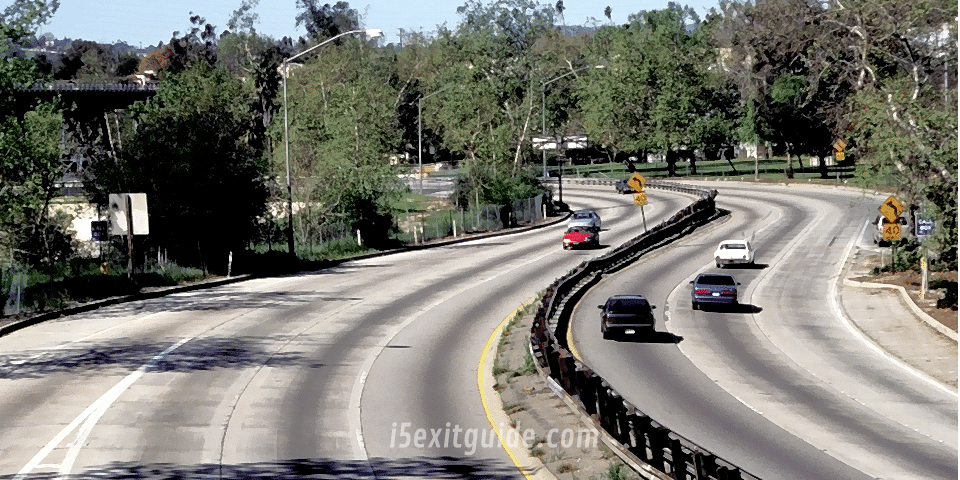
Driving the Arroyo Seco Historic Parkway is an energetic dance. Gone are the wide, forgiving lanes of the I-5. In their place, you’ll find tight curves that hug the contours of the natural ravine, stone-faced bridges that look like they belong in a European village, and a canopy of green that makes you forget you’re in the heart of one of the world’s largest metropolises. For the road trip enthusiast, it is the ultimate “slow-fast” detour-a chance to experience the high-octane glamour of early California car culture.
Fast Facts for the Road
Before you peel off the interstate, here is the quick breakdown of what to expect on the Arroyo Seco Historic Parkway:
- Total Mileage: Approximately 8.2 miles (from the Four Level Interchange in DTLA to Glenarm Street in Pasadena).
- Recommended Travel Time: 20 minutes (if you’re driving straight through) to 4 hours (if you’re stopping for sights).
- Best Time of Year to Visit: Year-round, but Spring (March-May) is spectacular when the California poppies and jacaranda trees are in bloom.
- Optimal Driving Window: Aim for a weekend morning (before 10:00 AM) to avoid the infamous Los Angeles commuter traffic and truly enjoy the curves.
The Route: A Geographic Walkthrough of California’s First Freeway
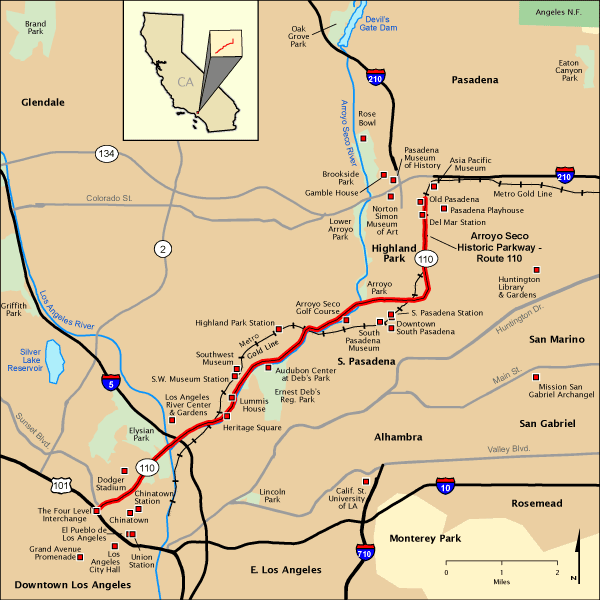
To experience the Arroyo Seco Historic Parkway correctly, we recommend starting at its northern terminus in Pasadena and heading south toward the skyscrapers. This direction offers a dramatic “reveal” of the Los Angeles skyline that never fails to spark excitement.
The Gateway: Old Pasadena and the Gamble House
Before your tires even hit the Arroyo Seco Historic Parkway, spend an hour in Old Pasadena. This isn’t your typical suburban shopping mall; it’s a preserved district of 19th-century brickwork and hidden alleyways. Just a few blocks away sits the Gamble House, an architectural icon of the American Craftsman movement. Built in 1908, its dark wood and leaded glass set the aesthetic tone for the entire Arroyo Seco region-one of hand-crafted beauty and harmony with nature.
The Launch: Glenarm Street
As you merge onto the 110 South at Glenarm Street, the atmosphere shifts instantly. The road narrows. The speed limit drops. You are now entering a sunken canyon. To your left and right, the walls are lined with ivy and native stone. You’ll feel the car lean into the first set of “S-curves.” This isn’t a road for cruise control; it’s a road for drivers who love to drive.
Heritage Square Museum: A Victorian Time Capsule
A few miles in, keep your eyes peeled for the Homer Street exit. Here lies Heritage Square Museum, a collection of eight historic structures saved from the wrecking ball during the mid-century urban renewal of LA. These brightly painted Victorian mansions, including the stunning Hale House, sit frozen in time against the backdrop of the modern freeway. It is a jarring, beautiful contrast that perfectly captures the “then and now” spirit of the Arroyo.
The Lummis House (El Alisal)
Further south, you’ll pass the home of Charles Lummis, a legendary journalist and activist who walked from Cincinnati to LA in the 1880s. His home, El Alisal, is a literal castle built from river rock pulled directly from the Arroyo Seco. It stands as a testament to the rugged, eccentric spirit of early Los Angeles. The smell of sun-baked stone and sagebrush here is intoxicating, providing a sensory bridge to California’s frontier past.
The Tunnels and the Grand Reveal
As you approach the southern end of the Arroyo Seco Historic Parkway, you will pass through a series of four tunnels carved into the hillsides of Elysian Park. The sound of your engine will echo off the tiled walls-a mechanical roar that signals your arrival. As you burst out of the final tunnel, the greenery falls away, and the glass-and-steel towers of Downtown Los Angeles erupt into view. It is one of the most iconic cinematic vistas in the world.
Hidden Gems: Where the Locals Go
While the main stops are historic heavyweights, the Arroyo Seco hides a few secrets that most I-5 travelers fly right past.
Peanut Lake at Ernest E. Debs Regional Park
Tucked into the hills above the Arroyo Seco Historic Parkway is Debs Park. Most people stick to the road, but if you take the exit for Via Marisol and hike up the scrub-covered hill, you’ll find Peanut Lake. It’s a small, secluded pond that offers a 360-degree view of the San Gabriel Mountains and the DTLA skyline. It’s the perfect spot to stretch your legs and breathe in the scent of wild eucalyptus while watching hawks circle the canyon.
Galco’s Old World Grocery
Located in the Highland Park neighborhood just off the Arroyo Seco Historic Parkway, Galco’s is a pilgrimage site for fans of vintage Americana. This isn’t a grocery store; it’s a “Soda Pop Stop.” They stock over 700 varieties of cane-sugar sodas, many of which haven’t been seen on mainstream shelves in decades. Grab a cold bottle of black cherry or sarsaparilla to enjoy as you finish your drive.
Practical Tips for the Modern Explorer
The Arroyo Seco Historic Parkway was designed in the 1930s when cars were smaller, slower, and narrower. Driving it today requires a bit of “energetic” focus.
- The “Stop and Pray” On-Ramps: This is the most important piece of advice for any newcomer. The on-ramps on the 110 are not the long, merging lanes you find on the I-5. They are essentially 90-degree turns that require you to come to a full stop and wait for a gap in 55-mph traffic. Commit to the gas pedal. When you see your opening, floor it.
- Vehicle Size Matters: If you are driving a massive dually pickup truck or a wide Class-A RV, avoid this route. The lanes are significantly narrower than modern standards. There are also several low-clearance bridges that can be treacherous for high-profile vehicles. Stick to a standard car, SUV, or motorcycle.
- Fuel and Services: While there are plenty of gas stations in the neighborhoods adjacent to the Parkway (Highland Park, South Pasadena), there are no services directly on the freeway. Fuel up in Pasadena or Downtown LA before you commit to the curves.
- Stay Alert for “The Squeeze”: Because the road follows the natural curve of the Arroyo, the left lane can feel very tight against the center divider. If you aren’t comfortable with close quarters, stay in the right lane, but be prepared for those sudden on-ramps.
Conclusion: The Soul of the Southern California Road
The I-5 may be the fastest way to get from Point A to Point B, but the Arroyo Seco Historic Parkway is the way you experience California. It is a road that demands your attention and rewards your curiosity. It captures the transition from the rugged, wild West to the sophisticated, mid-century “City of Tomorrow.”
As you navigate the final curve and merge into the bustling heart of Los Angeles, you’ll realize that the Parkway has given you something the interstate never could: a sense of place. You haven’t just driven through a city; you’ve driven through its history, its architecture, and its soul.
So, the next time you see the signs for the 110 South as you hit the LA basin, don’t just stay the course. Downshift, grip the wheel, and take the detour. The Mother of Freeways is waiting to show you why we fell in love with the open road in the first place.
The I-5 Exit Guide is the Internet’s largest and most complete website dedicated to Interstate 5 travelers. Find detailed exit service listings… lodging, camping, food, gas and more for every exit from Washington to California!
On the road? Why not take us with you. The I-5 Exit Guide is mobile-friendly and totally FREE. No App Required.
Traveling another route? Visit our growing family of exit guides: I-4 Exit Guide, I-5 Exit Guide, I-10 Exit Guide, I-75 Exit Guide, I-80 Exit Guide and I-95 Exit Guide. Detailed exit service listings… discount lodging, camping, food, gas and more for every exit along the way!